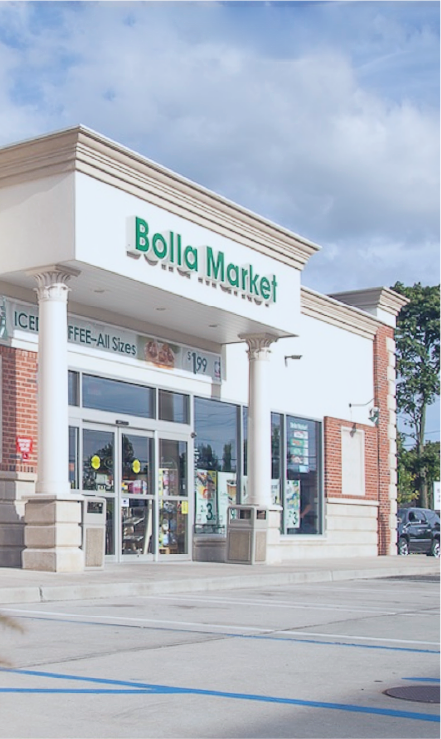
Based in Garden City, New York, Bolla Market (officially known as Bolla Oil Corp.) is a billion-dollar operator of over 350 upscale gas stations, car washes, and convenience stores across New York and New Jersey. Known for its premium facilities, the company features gourmet delis and partners with fast-food brands like Burger King and Tim Hortons.
A retail and distribution business of this scale generates a constant, high-volume flow of supplier invoices across many legal entities — as many as a thousand a day. Every invoice must be approved by the person who ordered the work, and in many cases by ownership, before it can be paid. As Bolla Market grew, that back-office workload made efficient, well-controlled accounts payable a priority for the finance team.
● Founded 1989, headquartered in Garden City, New York
● 352 stores — one of the largest US convenience-store operators
● Over 2,000 employees across New York and New Jersey
● ~10 companies managed under one accounts payable operation
● Up to 1,000 invoices received per day
● Runs on SAP, with a native DOKKA integration
● Full invoice-lifecycle and aging reports delivered to the CFO daily
Before DOKKA, accounts payable at Bolla Market was entirely manual and paper-based. Physical copies of every invoice were placed in folders and routed for approval, and each approver signed their name directly on the paper invoice. Only then would the invoice be scanned so the team in India could key it into SAP.
With that many invoices moving through folders across so many companies, there was no way to see where any given invoice stood in the approval and processing cycle. Documents were misplaced, and copies of invoices went missing.
The company’s CFO had wanted a more automated system for some time and had kept DOKKA on the radar. This year, Bolla Market decided to implement it.
“Prior to DOKKA, it was all a manual process. We actually had physical copies of the invoices. We would put them in folders, and the various people would have to approve by signing their name to the invoice in the folder. Then we would scan that invoice so the team in India could process it in SAP. There was no way to keep track of where the invoice was in the cycle.”
Bolla Market implemented DOKKA integrated directly with SAP. The onboarding work — setting up each of the companies, integrating with SAP, building automatic approval flows for recurring vendors, and configuring how approved invoices sync back into SAP — was handled internally with DOKKA’s support, and went smoothly.
“The onboarding process was quite good. We had enough training sessions, and we ran sessions with our approvers and our accounting folks. Support was quite responsive, and overall it was very good.”
Today, accounts payable runs as a daily process. Invoices arrive in DOKKA in two ways: vendors send them straight to dedicated DOKKA email addresses, or the team forwards them in from a central AP inbox, and hard copies are scanned in. DOKKA reads each invoice and captures its key fields, and because the platform’s AI learns each vendor’s format over time — helped along by a simple drag-a-field feature that maps data to the right place — recognition keeps improving as more invoices flow through.
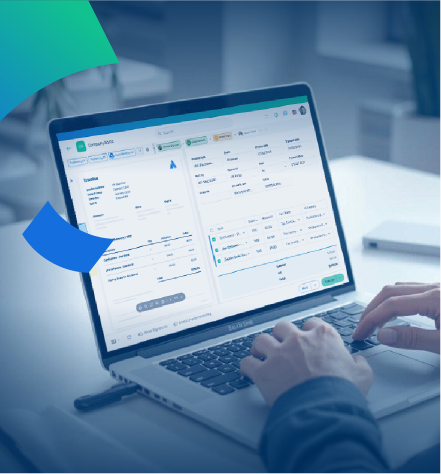
Each day, the team reviews new invoices, assigns them to the right approver, and — once fully approved — publishes them to SAP so payments can be scheduled. Automatic approval flows route recurring vendors to the person who should sign off, and once an invoice is published in SAP, DOKKA keeps a link so anyone can pull up a copy in seconds. A main view and a filterable table view make it easy to work across the full volume.
The team has also built its own reporting workflow on top of DOKKA. Using data from the platform, they produce reports that track every invoice by stage in its lifecycle — pending pre-approval, pending approval, approved but not yet published, and published — and how long each invoice has been sitting at each stage. This has become a daily management tool: the report goes to the CFO every day, giving finance leadership a live picture of the whole operation and a fast way to spot and resolve problem areas.
“Now we have a place where we can track the life cycle of the invoice, and a place where we can track who’s approving the invoices. And once it publishes in SAP, it also has a link, so you can click on it and get a copy of the invoice too.”
The reporting Bolla Market built on DOKKA has become central to how finance runs. The team tracks every invoice by stage — pending pre-approval, pending approval, approved but not yet published, and published — and ages how long each has been in the pipeline. That report reaches the CFO every day, turning a former blind spot into a live management tool for finding and clearing bottlenecks across all of the company’s entities.
“It’s really helping us in terms of visibility. This report is provided to the CFO on a daily basis.”
Every invoice now has a named approver who must sign off inside DOKKA before it moves forward, and automatic approval flows route recurring vendors to the right person. Approval is documented rather than scribbled on paper, giving the finance team clear accountability across all of its companies.
Invoices no longer live in folders that can be misplaced. Everything is captured in one system, and once an invoice is published to SAP, a link retrieves the copy instantly — eliminating lost documents and saving the time that used to go into hunting for paperwork.
DOKKA handles up to a thousand invoices a day across roughly ten companies, with each invoice processed in about a minute. As the platform’s AI continues to learn Bolla Oil’s vendors, the team expects that to keep getting faster.
“DOKKA has definitely been very helpful, and it’s made things more efficient. The main thing I love about it is that it’s able to track where things are, and to give us accountability, because now we have approvers assigned to invoices. From an end-to-end standpoint, it’s been a very key piece of our new processes.”
See how you can take your invoice processing from 5 minutes to 1 minute per invoice, with DOKKA.