






FOR BIOTECH, PHARMA AND MEDTECH FINANCE TEAMS

AP Automation for Life Sciences

DOKKA deploys AI agents that capture CRO and lab supply invoices, code them to the right trial, grant, or entity, and route approvals to the person who owns the budget. Your ERP stays the system of record.

TRUSTED BY 3,500+ FINANCE TEAMS WORLDWIDE

Processing 1M+ financial documents every month across 14+ countries

ONE TRIAL, FIVE KINDS OF INVOICE

Every one of them arrives differently

A single study pulls in five vendor types on five billing rhythms, and every one of them ends up on the same AP desk.

CRO milestone invoices icon

CRO milestones

Billed against milestones, not months

Clinical site payments icon

Site payments

Per patient, per visit, per site

Lab supplies icon

Lab supplies

High volume, low value, PO-backed

Reagent orders icon

Reagents

Catalog codes and lot-level detail

Consumables icon

Consumables

Recurring, and easy to duplicate

THE PAYABLES PROBLEM

Invoice volume scales with the science. The AP team does not.

Every invoice above ties back to a budget line somebody in finance has to defend.
Four things break first.

CRO invoices that never match the plan

Milestone billing arrives late, out of sequence, and rarely in the period you accrued for. Finance rebuilds the picture by hand, invoice by invoice.

By the time the numbers are right, the close is already behind.

Coding only two people fully understand

Spend has to land against the right trial, grant, entity, and cost center, and the rules live in the heads of your controller and one senior accountant.

When either is away, coding accuracy slips and the audit questions start.

Approvers who do not live in the ERP

The person who knows whether the reagents actually arrived is a lab manager, not an accountant, and they have no reason to log into a finance system.

So approvals happen over email, and AP spends the week chasing them.

An audit trail assembled after the fact

Investors, external auditors, and grant funders all want evidence of who approved what and when. Most teams reconstruct it from inboxes and shared drives.

The evidence exists. It was just never captured in one place.

HOW IT RUNS

From CRO invoice to ERP entry

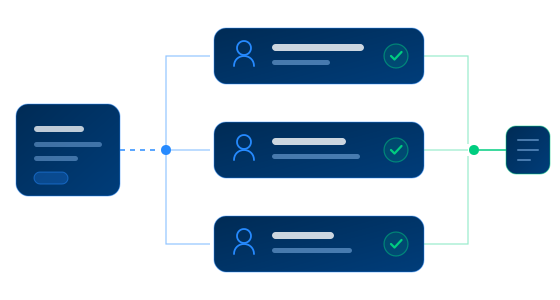
The four agents run in sequence on every invoice that arrives, and your team reviews rather than keys.

Invoice Processing Agent

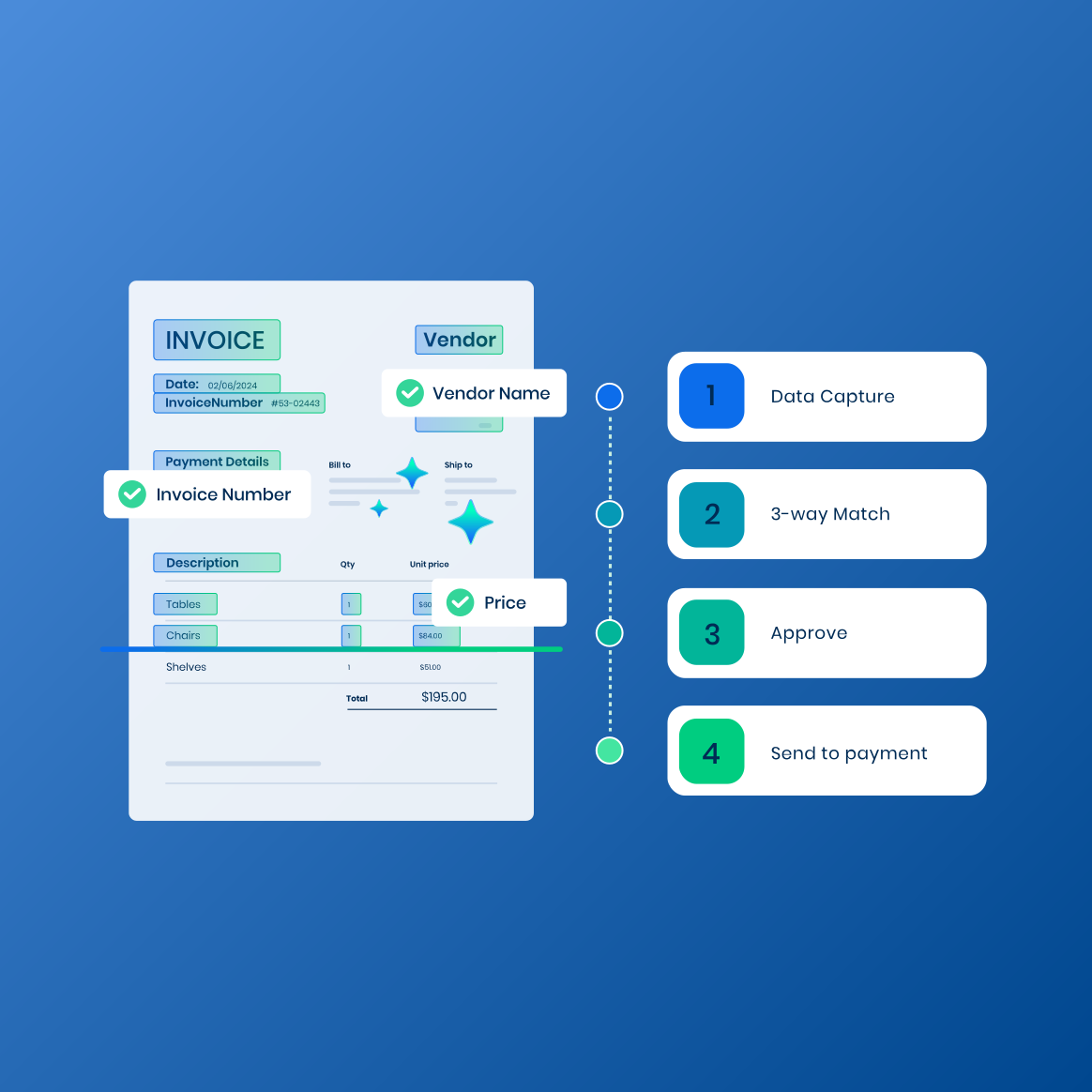
Captures CRO invoices, lab bills, and reagent orders at line level, including catalog codes and lot detail.

Approval Agent

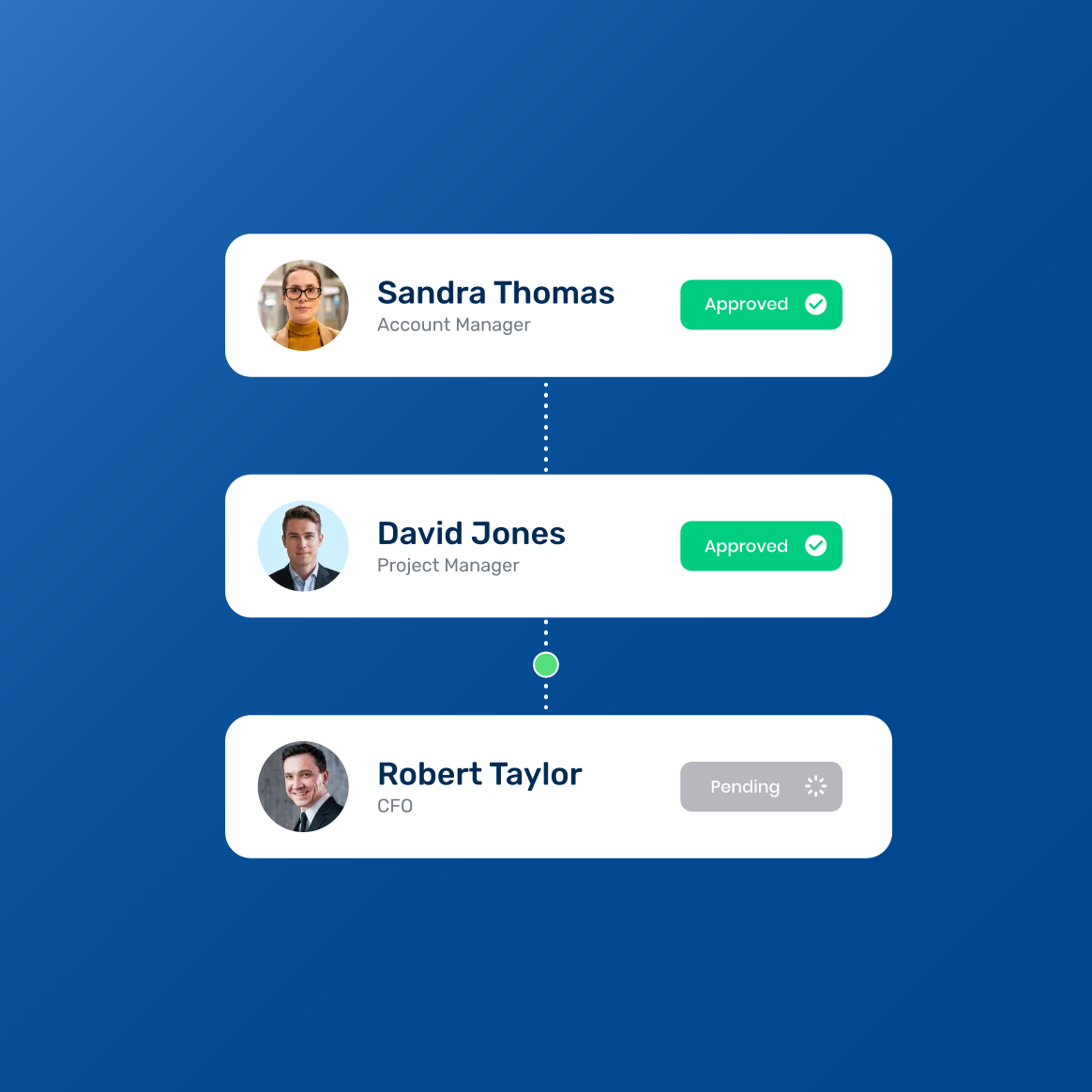
Routes each invoice to the budget owner, whether that is a principal investigator, a lab manager, or the controller.

PO Matching Agent

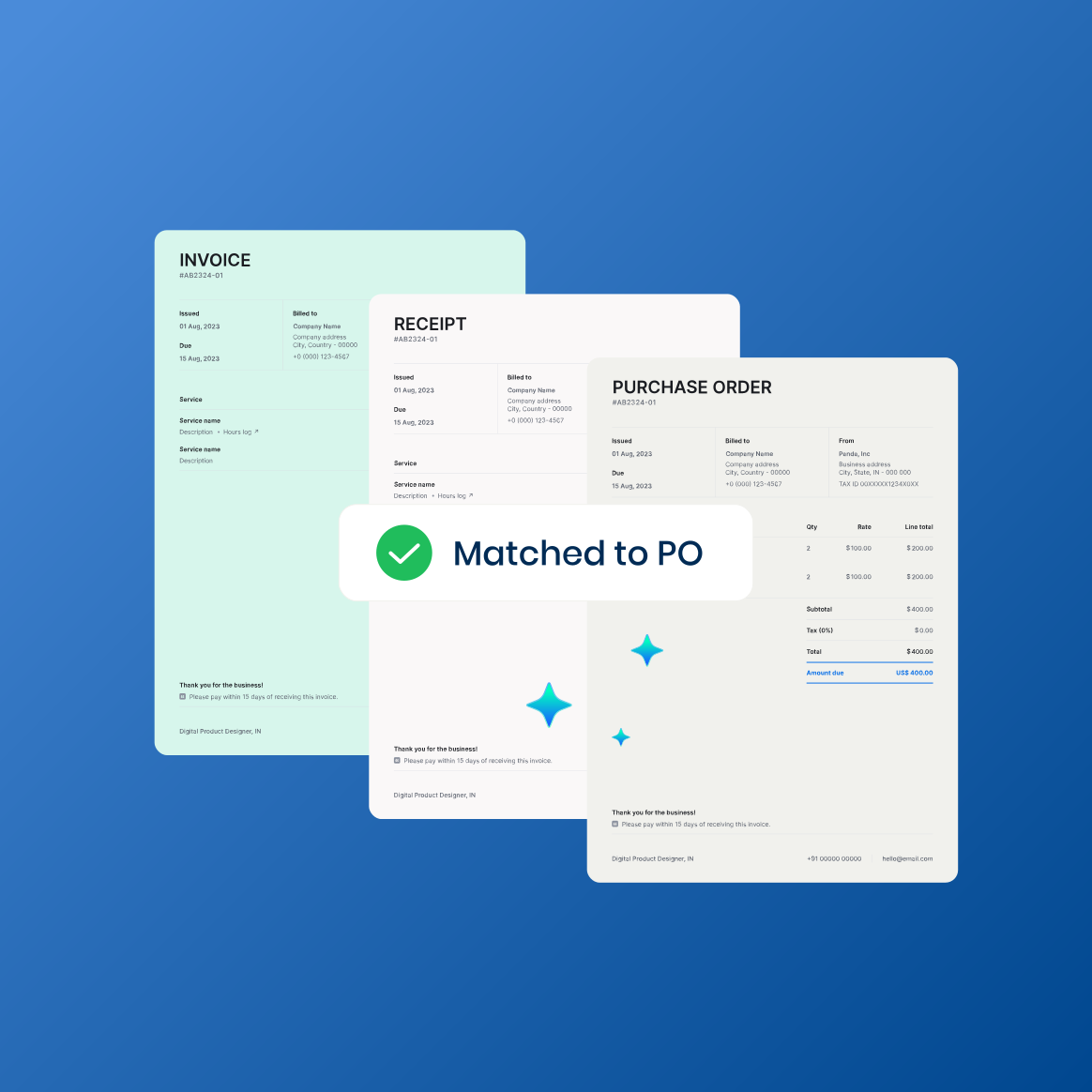
Two-way and three-way matching against lab supply and CRO purchase orders, with variances surfaced before posting.

Document Agent

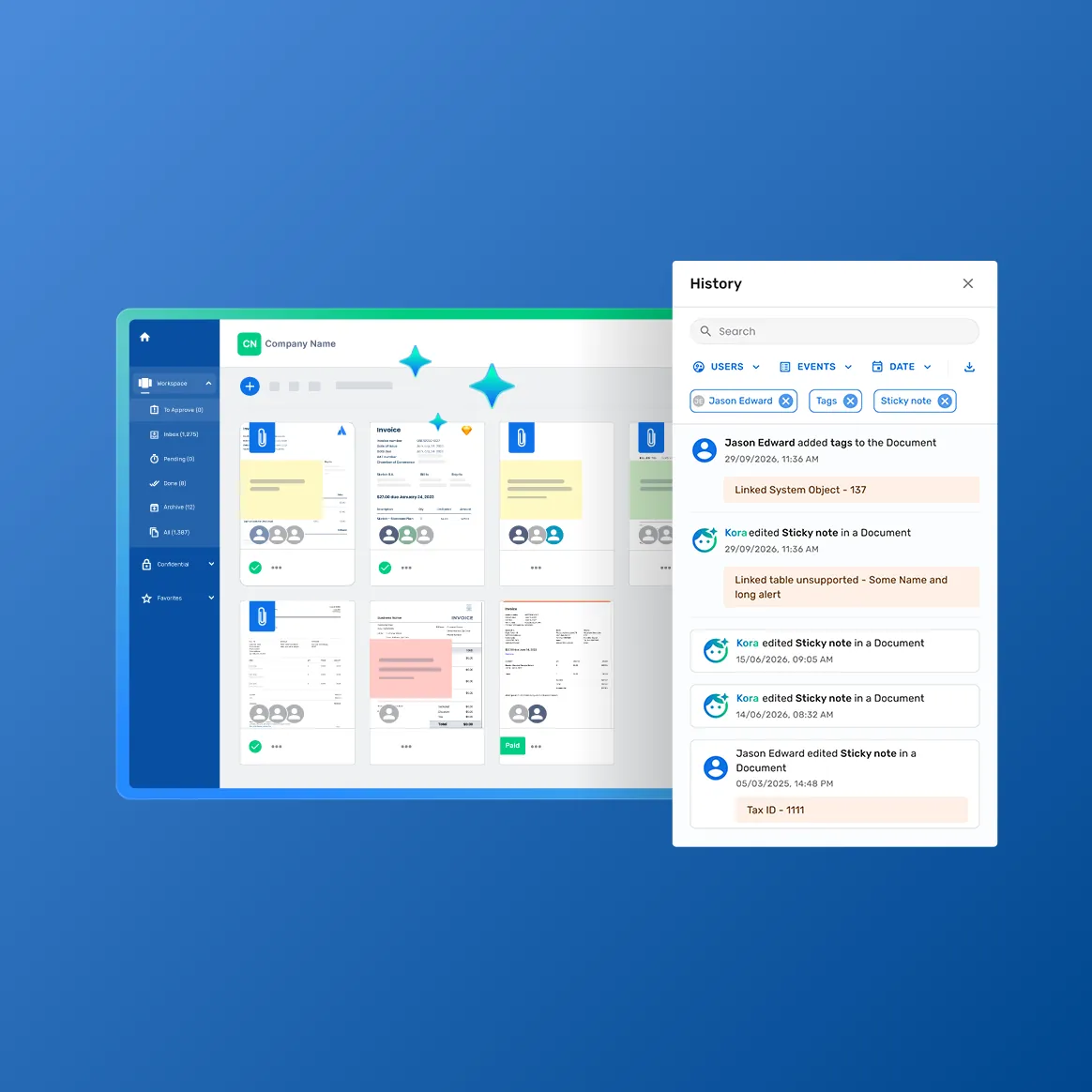
Flags duplicate invoices across sites and vendors, and keeps an attributable trail on every document.

What lands in your ERP is a validated, approved entry. The ERP stays the system of record throughout.

CODING

Spend that lands on the right line

The agents learn how your team codes and apply the same pattern to new invoices, across every dimension your ERP already uses.

Clinical trial coding dimension icon

Trial

Code against the protocol the spend belongs to

Grant coding dimension icon

Grant

Keep funder reporting defensible

Legal entity coding dimension icon

Entity

Multi-entity groups stay cleanly separated

Cost center coding dimension icon

Cost center

Department and site level detail

APPROVALS

The budget owner approves, not the licence holder

Most life sciences approvals sit with people who will never open the ERP. DOKKA routes to them directly and escalates when they go quiet.

Approval routing to principal investigator, lab manager and controller
BEFORE AND AFTER

What changes when agents do the handling

The same invoices still arrive. What changes is how much of the handling your team does, and how much is already done by the time anyone looks at it.

Manual AP

AP with DOKKA agents

Want the arithmetic before the conversation? The AP automation ROI calculator runs the numbers on your own invoice volume in about a minute.

EVIDENCE

What the auditor asks for, already captured

Between investors, external auditors, and grant funders, life sciences finance is inspected more than most. DOKKA is ISO 27001 certified and SOC 2 examined, with end-to-end encryption and an attributable trail on every invoice and approval.

ISO 27001 Certified

SOC 2® Examined

Role-based access & audit trails

ERP-native architecture

ERP INTEGRATION

Connected to the system you already run

No migration, no second system of record. DOKKA connects natively and posts back into the ERP your controllers already close in.

AP and Close

AP automation

AP INTO CLOSE

Where CRO accruals stop being guesswork

Milestone-based CRO billing is where the month-end close usually breaks. Clean AP data flows straight into DOKKA Close, so accruals, journals, and reconciliations start from numbers your team can defend.

Clean AP data into close icon

Cleaner data flowing into close

Accruals from AP activity icon

Accruals built from real AP activity

Journals generated from AP icon

Journals generated from AP activity

Unified audit trail icon

One audit trail across AP and Close

QUESTIONS FINANCE TEAMS ASK

AP automation for life sciences, answered

The questions that come up most often when a life sciences finance team evaluates AP automation.

Yes. The Invoice Processing Agent captures CRO invoices at line level and prepares them for posting, including milestone billing that arrives out of sequence. The PO Matching Agent checks them against the purchase order and receipt, so variances surface before they reach the ledger rather than at month-end.

Yes. The agents learn how your team codes spend across trials, grants, cost centers, and entities, then apply that pattern to new invoices for review. Because DOKKA posts into your ERP, the dimensions you already use stay the source of truth.

Yes, and for most life sciences teams this is the fastest win. Approvals route to whoever owns the budget, including principal investigators, lab managers, and site staff who never touch the ERP. Reminders and escalations run automatically, so AP stops chasing.

DOKKA maintains a complete audit trail with user-level attribution and full approval history on every invoice, and the platform is ISO 27001 certified and SOC 2 examined with end-to-end encryption. Part 11 obligations apply across your validated systems and quality processes, so treat the DOKKA audit trail as evidence supporting those controls rather than a certification of them. Your ERP remains the system of record.

DOKKA integrates natively with NetSuite, SAP Business One, Acumatica, QuickBooks, Priority, Sage, Microsoft Dynamics, MDA and MRI, and Xero, with API connectivity for systems outside that list. There is no ERP migration involved, because DOKKA connects to the system you already run.

No, and that is deliberate. DOKKA ends at a validated, approved invoice posted to your ERP, and payment execution stays in your ERP or your bank. There are no supplier transaction fees, and your existing payment controls stay exactly as they are.

Most AP deployments go live in two to four weeks. Setup is a connection to your ERP plus a training period where the agents learn your coding and approval patterns, not a systems project.

It fits teams processing real invoice volume, roughly a few hundred invoices a month and upward, across one or more entities on a proper ERP. Below that, a manual process usually still holds. Above it, the only other answer is headcount.

GET STARTED

Put four AP agents on your payables

Live in two to four weeks, on the ERP you already run, with a human reviewing every step.
