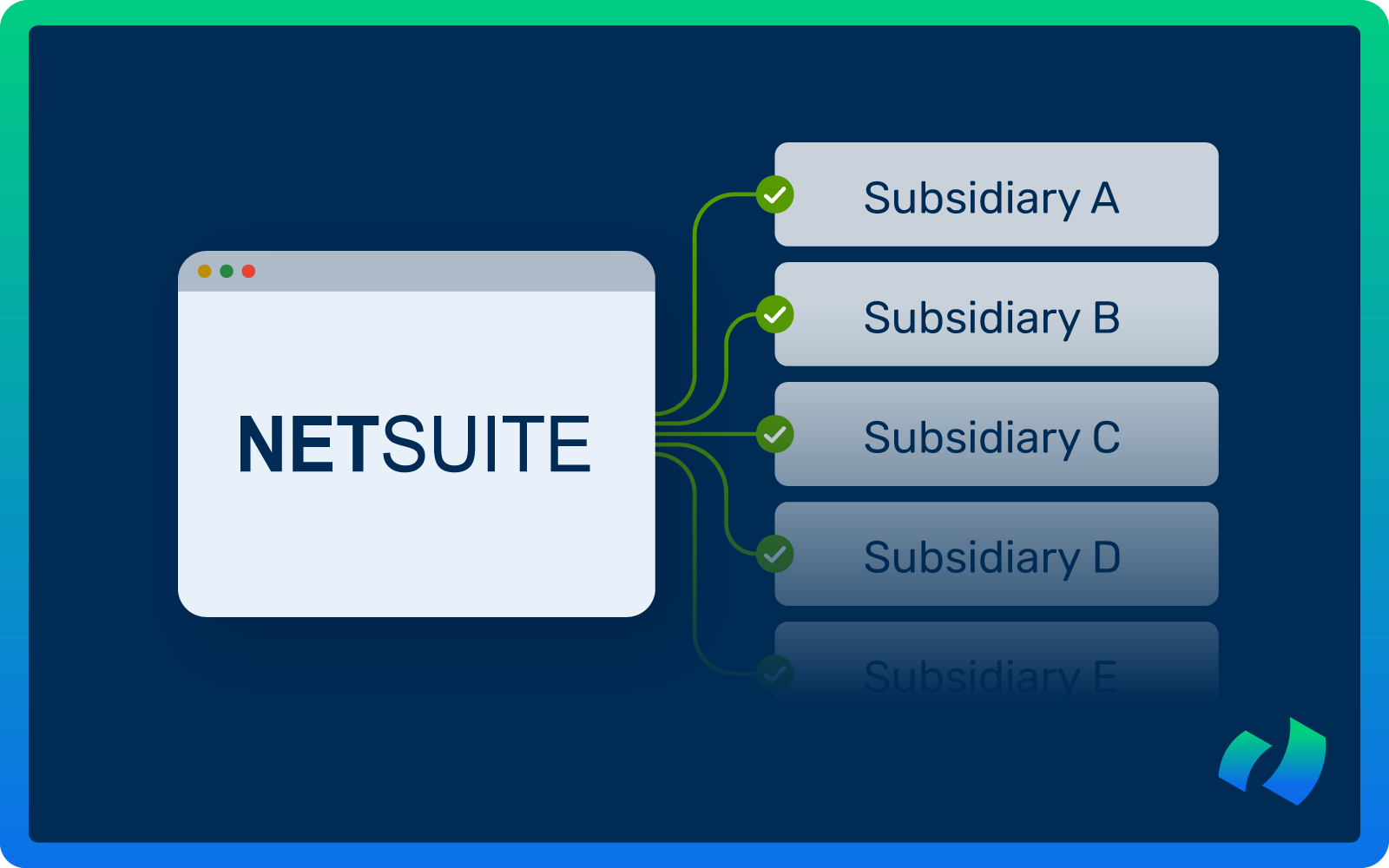
Managing accounts payable (AP) across more than 30 subsidiaries in NetSuite is not a linear scaling problem. It is about managing exponential complexity. Each additional entity introduces new approval rules, vendor relationships, currencies, tax treatments, and operating behaviors. What works at five subsidiaries often becomes fragile, opaque, and slow at thirty.
The following article is for CFOs, Controllers, AP Managers, and NetSuite Administrators who are looking for practical, scalable ways to automate multi-entity AP workflows in NetSuite. It focuses on real operational challenges faced by NetSuite environments and explains how automation, when implemented correctly, can restore control without sacrificing flexibility.
Throughout the article, the discussion also highlights where specialized AP automation platforms like DOKKA fit into the NetSuite ecosystem and explains why many multi-entity organizations rely on such solutions to make AP automation work at scale.
Why Multi-Entity AP Automation Breaks Down at Scale
NetSuite provides a strong accounting foundation, but AP processes often degrade as organizations grow. These issues rarely appear overnight. Instead, inefficiencies build quietly over time until invoice backlogs, approval delays, and reconciliation problems become ongoing challenges.
In multi-subsidiary environments, AP teams handle invoices that vary by geography, language, compliance requirements, and internal policy. When these variables are managed manually or through loosely connected tools, errors become systemic rather than isolated incidents.
Breakdowns most often appear as:
- Invoices arriving in inconsistent formats, currencies, and languages
- Incorrect subsidiary selection and mis-posted transactions
- Approval chains that differ by entity and are difficult to maintain
- Limited real-time visibility into invoice status
- Month-end delays caused by stalled invoices
- Heavy reliance on email, spreadsheets, and informal workarounds
At the root of these challenges is a structural mismatch. AP is a process, while NetSuite serves as a system of record. Without an orchestration layer to manage documents, approvals, and exceptions, teams are left forcing process logic into areas where it was never designed to function.
The Core Requirements of Multi-Entity AP Automation
Successful AP automation in organizations with 30 or more subsidiaries requires a careful balance between global standardization and local control. Solutions that lean too far in either direction tend to fall short.
High-performing multi-entity AP teams consistently align around the following requirements:
1) Centralized Invoice Capture With Decentralized Ownership
Invoices should enter through a single, standardized intake layer. A unified entry point reduces fragmentation and ensures invoices are not lost in inboxes or disconnected local systems.
After capture, ownership shifts to the appropriate subsidiary. Local AP teams retain responsibility for review, coding, and processing without being burdened by global invoice volume.
Key capabilities include:
- Unified intake through email, upload, portals, or e-invoicing
- Automated routing to the correct subsidiary
- Clear local accountability
2) Reliable Subsidiary and Vendor Identification
Accurate subsidiary and vendor identification remains one of the most error-prone steps in NetSuite AP. Vendors often exist across multiple entities with small but meaningful variations.
Automation must reliably determine:
- The correct subsidiary
- The appropriate vendor record
- Whether an invoice is local, global, or intercompany
Reducing manual subsidiary assignment alone can eliminate a significant share of posting errors.
3) Dynamic, Rule-Based Approval Workflows
Approval workflows must adapt to context such as entity, amount, department, and invoice type. Static approval chains fail to scale in complex, multi-entity environments.
Effective automation supports:
- Entity-specific approval thresholds
- Conditional routing logic
- PO and non-PO approvals within the same framework
4) Real-Time Synchronization With NetSuite
Automation should never introduce delays between operational activity and the general ledger. Finance leaders rely on NetSuite for accurate visibility into liabilities and accruals.
A scalable solution ensures:
- Approved invoices post automatically
- Status updates sync bi-directionally
- Duplicate data entry is eliminated
5) Local Execution With Group-Level Oversight
Local teams require efficiency and operational clarity, while corporate finance needs cross-entity visibility and risk oversight. Effective automation supports both perspectives at the same time.
Native NetSuite Capabilities: Strengths and Limitations
NetSuite is a strong accounting platform, but it is important to distinguish what it does well from what it was never designed to handle.
Where NetSuite Excels
NetSuite provides essential foundations for multi-entity accounting:
- Subsidiary hierarchies and shared charts of accounts
- Role-based permissions and segregation of duties
- Transaction-level approvals
- Intercompany accounting and eliminations
- Audit trails and compliance reporting
Where AP Processes Strain
AP automation extends upstream from posting transactions, which is where NetSuite begins to show limitations:
- Limited native OCR and invoice capture
- Complex and costly approval customizations
- Poor visibility into invoices before posting
- Minimal collaboration and exception handling
For this reason, many organizations choose to layer a dedicated AP automation platform like DOKKA on top of NetSuite instead of over-customizing the ERP itself.
A Scalable Architecture for Multi-Entity AP Automation
Organizations that succeed treat AP automation as an architectural problem rather than a feature checklist.
Layer 1: Invoice Intake and Data Extraction
All invoices enter through a unified intake layer. DOKKA captures invoices from multiple channels and applies AI-powered OCR trained specifically on financial documents, ensuring accurate data extraction across formats and languages.
Layer 2: Intelligent Invoice Classification
Extracted data is enriched and classified to identify the correct subsidiary, vendor, invoice type, and routing path. Accuracy improves over time through historical behavior and NetSuite master data.
Layer 3: Approval Orchestration
Approvals are managed outside NetSuite transaction screens, giving approvers full context at every step. DOKKA supports complex, multi-entity approval logic without the need for custom scripting.
Layer 4: Posting and Continuous Sync
Approved invoices post automatically to NetSuite. Payment status and updates sync back in real time, preserving a single source of truth across systems.
Scaling PO and Non-PO Invoice Processing
Multi-entity organizations rarely achieve uniform procurement maturity. Some subsidiaries operate with strict PO controls, while others rely heavily on non-PO spend.
Automation for PO invoices focuses on matching and exception handling. Clean matches can be auto-approved, while discrepancies are flagged early for review.
Automation for non-PO invoices provides intelligent coding suggestions based on historical behavior, reducing manual effort and improving consistency.
DOKKA supports both invoice types within a single workflow, removing the need for fragmented processes across subsidiaries.
Eliminating Approval Bottlenecks Across Entities
Approval delays are among the most costly inefficiencies in multi-entity AP. They cause late payments, strain vendor relationships, and create unpredictable cash flow.
Common causes include lack of context for approvers, inactive users, and manual follow-ups. Modern AP automation tackles these challenges with structured workflows, automated reminders, and escalation paths.
With DOKKA, approvals stay visible, traceable, and actively managed, no matter how many entities are involved.
Approval automation becomes especially critical in large NetSuite environments because of scale. When approval volume grows across dozens of subsidiaries, even minor inefficiencies multiply rapidly. A single inactive approver or unclear approval step can hold up hundreds of invoices downstream.
Well-designed automation prevents invoices from stalling silently. Each approval step has clear ownership, built-in SLAs, and escalation logic. Instead of AP teams chasing approvals manually, the system maintains momentum. Finance teams shift from reactive firefighting to proactive control, even as invoice volumes grow.
Auditability and Compliance Across 30+ Subsidiaries
As the number of legal entities grows, so does scrutiny from external auditors, internal audit teams, tax authorities, and corporate governance functions.
Multi-entity organizations must demonstrate consistent controls while still complying with local regulatory requirements. Meeting these expectations becomes challenging when AP processes rely on emails, shared folders, or undocumented approvals.
Automated AP workflows change the way compliance is enforced. Instead of depending on people to follow procedures, controls are built directly into the process. Every invoice follows a defined path, and any deviations are immediately visible.
From an audit and compliance perspective, several tangible benefits arise:
- Complete, time-stamped approval histories for every invoice
- Clear evidence that approval policies were applied consistently
- Centralized access to invoices, supporting documents, and comments
- Reduced dependency on individual employees to explain historical decisions
Because DOKKA synchronizes every step with NetSuite, auditors can trace an invoice from initial capture through approval and posting without gaps. This improves audit efficiency, reduces follow-up questions, and lowers the overall risk profile across all subsidiaries.
Gaining Cross-Entity Visibility Without Micromanagement
One of the most difficult challenges in multi-entity AP is achieving visibility at the group level. Corporate finance teams need to understand what is happening across the organization, but managing invoice-level activity for every subsidiary is not practical.
Traditional reporting methods such as saved searches, spreadsheets, and periodic check-ins are labor-intensive and backward-looking. They often reveal problems only after payments are late or accruals are inaccurate.
Modern AP automation provides real-time operational visibility without requiring central teams to handle day-to-day execution. With DOKKA, finance leaders can:
- Monitor invoice volumes and aging by subsidiary
- Identify approval bottlenecks before they affect payments
- Compare processing performance across entities
- Surface exceptions that require intervention
This approach establishes a governance model where oversight is continuous rather than episodic. Corporate teams can focus on trends and risk, while local teams maintain ownership of execution.
Measuring AP Performance That Actually Scales
Once AP workflows are automated, the focus shifts from asking “Are invoices getting processed?” to “How well is the process performing across the organization?”
Measurement becomes essential for continuous improvement, especially in multi-entity environments.
Not all metrics provide the same value. Some generate noise without delivering meaningful insight, while others highlight exactly where processes break down as scale increases.
The most effective organizations concentrate on a small set of impactful KPIs, such as:
- Invoice cycle time by subsidiary and invoice type
- Approval turnaround time and escalation frequency
- Cost per invoice processed
- Exception and rework rates
- On-time payment performance
DOKKA centralizes AP data across all entities, making it possible to track these metrics consistently and take action quickly. Patterns that would otherwise remain hidden (such as a specific subsidiary consistently delaying approvals or producing exceptions) become easy to spot and address.
Why DOKKA Is Built for NetSuite at Scale
Many AP automation tools work well in simple environments but struggle as subsidiary count, invoice volume, and approval complexity increase. DOKKA is designed specifically for NetSuite organizations operating at scale.
Its deep, bi-directional integration ensures that NetSuite remains the system of record while DOKKA handles operational complexity. Subsidiary hierarchies, approval logic, and accounting structures are respected rather than abstracted away.
For finance teams managing 30+ subsidiaries, this means:
- Faster time to value without heavy customization
- Lower operational risk as the organization grows
- A consistent AP experience across all entities
Manual processes and fragile customizations inevitably break under growth. In contrast, a well-architected automation layer allows finance teams to standardize intelligently, adapt locally, and maintain visibility globally.
By combining NetSuite with a specialized AP automation platform like DOKKA, organizations can transform AP from an operational bottleneck into a strategic advantage, ready to support whatever scale comes next.
Ready to streamline AP across all your subsidiaries? Book a demo with DOKKA today and see how automated workflows can transform your NetSuite operations.